European Defence Cooperation Strengthened at E5 Summit in Kraków; Joint Initiative on Drones and Air Defence Announced – In the background of the photo – the office of KG LEGAL Kiełtyka Gładkowski law firm
Publication date: February 26, 2026
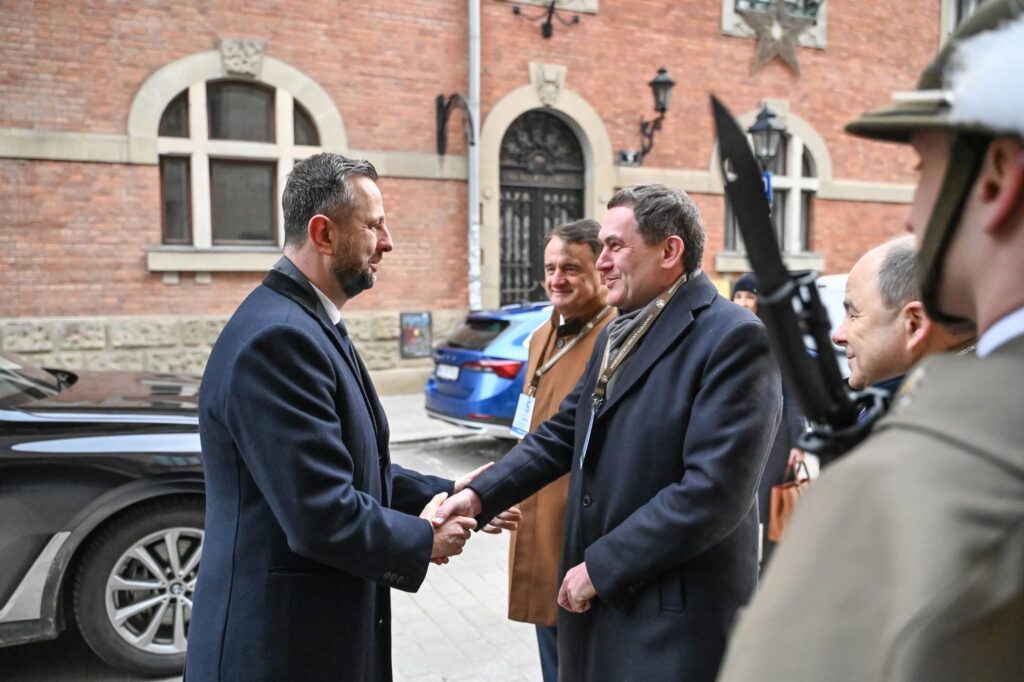
Kraków, Poland — February 20, 2026 — Defence ministers from the European Group of Five (E5) — France, Germany, Italy, Poland and the United Kingdom — convened on February 20, 2026 in Kraków for a high-level meeting focused on bolstering European and Euro-Atlantic security. The discussions and outcomes mark a significant step in collective defence cooperation, particularly in the fields of air defence systems and unmanned aerial capabilities. Ministers reaffirmed their unity in supporting NATO’s collective defence commitments and highlighted the growing need for robust, modernised defence capabilities in the face of evolving threats.
A key outcome of the Kraków summit was the launch of the Low-Cost Effectors and Autonomous Platforms (LEAP) initiative — a coordinated programme to jointly develop and procure low-cost air defence systems, including autonomous drones, interceptors, and related technologies. The initiative aims to accelerate European production of modern defence systems that enhance protection against aerial threats such as hostile unmanned aircraft and cruise missiles, drawing on battlefield lessons from recent conflicts and leveraging partner expertise.
E5 partners emphasised that the LEAP programme will help:
• improve the collective deterrence and defence posture of NATO and European forces;
• share technological development costs and capabilities among member states;
• bring scalable and cost-effective systems into operational use by 2027.
Focus on Drones and Modern Warfare
In addition to air defence hardware, the ministers endorsed deeper cooperation on unmanned systems, including both combat-capable drones and drone defence mechanisms. This marks a notable strategic shift towards investing in autonomous platforms that can play a dual role — from surveillance to active defence — in modern high-intensity conflict scenarios.
Development and production plans will be pursued jointly, with participating nations committing to integrate lessons learned from recent operations and battlefield experience into next-generation systems.
