Can supervisory board bear liability vis-à-vis creditors of the company or shareholders?
Publication date: May 11, 2026
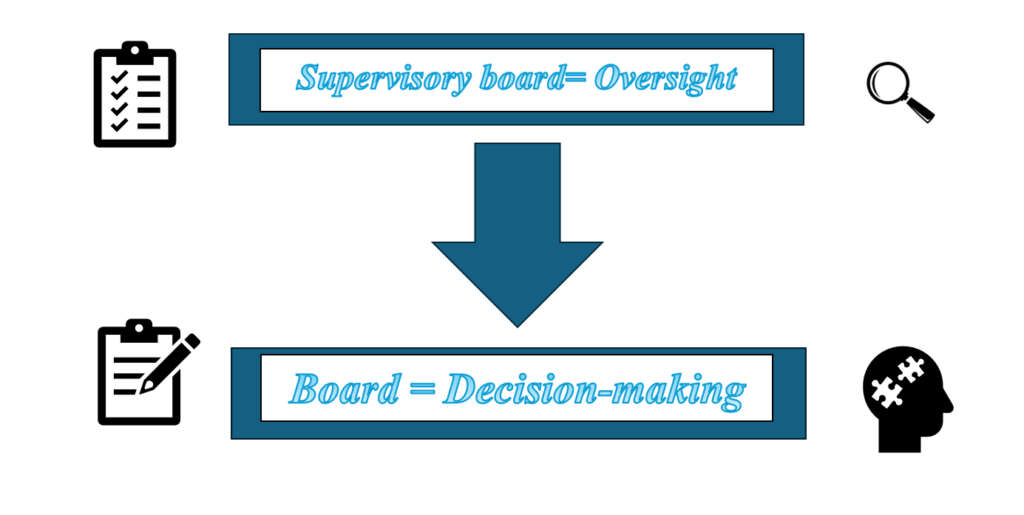
The supervisory board is one of the key bodies of a company, performing the function of constant oversight of the company’s activities in all areas of its operation. Its constitutional position is established as a separate body from the management board, deprived of the authority to manage the company’s affairs, but equipped with control instruments aimed at protecting the interests of the company and its shareholders. This structure is based on a clear separation of decision-making and supervisory functions, which, at least at the normative level, is intended to ensure the proper functioning of corporate governance mechanisms. However, business practice and extensive case law demonstrate that the boundaries between the powers of the supervisory board and the management board are not always clear. In particular, disputes focus on the scope of the supervisory board’s interference in the company’s day-to-day operations, the nature and effects of its resolutions, its communication relations with the management board, and the legal consequences of exceeding its authority. These issues most often arise in the context of the civil liability of supervisory board members and the assessment of the legality of their actions under the provisions of the Commercial Companies Code. The purpose of this article is to present selected issues related to the functioning of the supervisory board in companies against the background of court case law. This analysis focuses in particular on the liability of supervisory board members for damages, conflicts of authority with the management board, the risk of violating the law while performing supervisory functions, and formal issues related to the composition and operation of company bodies. This approach allows us to present the supervisory board not only as a formal control body, but also as an entity that actually contributes to shaping the company’s legal situation and bears the consequences of its actions or omissions.
Liability for damages of members of the supervisory board in a limited liability company
One of the constitutive features of a limited liability company is the lack of liability of shareholders for the company’s obligations, which, however, applies exclusively to the ownership sphere. The liability of individuals actually participating in the management and supervision of the company’s operations, particularly members of its governing bodies, is shaped differently. While the legal status and liability of management board members are the subject of extensive doctrinal and case law analysis, the liability of supervisory board members remains relatively less frequently discussed, even though they also bear a real risk of legal liability for improper performance of their duties. The basic regulation of the civil liability of supervisory board members in a limited liability company is contained in Article 293 of the Commercial Companies Code, which establishes an autonomous basis for the liability for damages of members of the company’s governing bodies, while excluding the application of the general principles of tortious liability of the Civil Code. Under this provision,
a supervisory board member is liable to the company for damage caused by an act or omission contrary to the law or the provisions of the company’s articles of association, unless they are not at fault.
This structure is based on contractual liability (ex contractu), based on a special contractual bond between the company and a member of its governing body. Case law has established that liability under Article 293 of the Commercial Companies Code requires the cumulative fulfillment of four conditions: damage to the company, an adequate causal link between the conduct of the governing body member and the resulting damage, unlawfulness of the act or omission, and fault, which, importantly, is subject to a statutory presumption. This liability covers both actual losses and lost profits that the company could have expected had the supervisory board member not culpably breached their duties. Of particular importance with respect to the supervisory board is the heightened degree of due diligence resulting from the professional nature of the role performed. As indicated in the case law, supervisory board members are required not only to formally perform control functions but also to actively and professionally oversee the company’s operations, including ongoing assessment of its financial condition and responding to signals indicating a threat to the company’s financial interests. Ignorance of the company’s economic situation, especially in the event of a risk of insolvency, cannot constitute a circumstance excluding liability. The scope of liability of supervisory board members is determined not only by statutory provisions, in particular Articles 214, 219, and 222 of the Commercial Companies Code, but also by the provisions of the company agreement, which may provide for an extended list of supervisory or consultative duties.
It should be emphasized that this liability is assessed according to the concept of individual fault, not the collective fault of the body, although, in principle, it is joint and several towards the company. This means that the company may seek redress of damages both from all board members jointly and from each of them individually, while maintaining recourse claims between members of the body. A significant limitation of the liability of supervisory board members is the introduction of the so-called “severance clause” into Article 293 § 3 of the Commercial Companies Code. The business judgment rule states that a member of a supervisory board is not liable for damage resulting from an unsuccessful business decision if they acted loyally to the company and within the limits of reasonable business risk, based on available information, analyses, and opinions. However, the burden of proof in this regard rests with the supervisory board member, who must demonstrate that they have met the conditions excluding their guilt. Case law also emphasizes that the liability of supervisory board members is not excluded by the fact that management board members are also liable. In certain circumstances, joint and several liability for damages of both bodies to the company is possible if the damage resulted from their unlawful and culpable conduct. This leads to the conclusion that the supervisory board is not merely a formal body, but an entity actually burdened with the risk of financial liability for improper supervision of the company’s operations.
Competence and communication conflicts between the supervisory board and the management board
The case law of common and administrative courts clearly emphasizes the need for a strict delineation of the powers of the supervisory board and the management board, treating this division as a fundamental element of proper corporate governance in companies. Disputes in this regard arise primarily in situations in which the supervisory board, although formally exercising its supervisory powers, encroaches on the management of the company’s affairs, which are statutorily reserved for the management board. The Supreme Administrative Court’s judgment of June 26, 2019, case no. I FSK 1228/17, clearly emphasized that the actions of supervisory board members cannot involve the actual assumption of management powers, even if this is done pursuant to resolutions of the shareholders’ meeting. In this case, the practice of concluding agreements with supervisory board members under which they performed activities typical of management boards, such as deciding on pricing policy, employment, or production plans, was questioned. The Supreme Administrative Court found that such actions lead to a blurring of the normative division of powers between company bodies, which is inconsistent with the structure of a capital company and the principle of the exclusive right of the management board to manage the company’s affairs. A similar position is presented in civil court case law, which consistently indicates that the supervisory board is not a management body, and its role is limited to ongoing oversight of the company’s operations. The Supreme Court’s judgment of May 17, 2018, V CSK 322/17, emphasized that the exercise of control powers, regardless of their normative basis, must be consistent with the purpose of supervision and must not lead to the de facto paralysis of the management board’s activities. Although the case concerned the right to individual control of a shareholder, the arguments presented therein remain fully relevant also in the context of the supervisory board-management relationship, indicating that control instruments cannot be used in a manner inconsistent with the functional division of roles within the company. The Court of Appeal in Katowice highlighted the issue of communication conflicts in its judgment of January 31, 2017, V ACa 350/16, emphasizing that the manner in which control rights are exercised cannot lead to harassment of the company’s governing bodies or create artificial barriers to its operation. The court clearly stated that the right of control, even if broadly applicable, cannot be exercised in a manner that disrupts the ongoing management of the company, which is also crucial for assessing the relationship between the supervisory board and the management board. The judgment of the Court of Appeal in Szczecin of December 12, 2013, I ACa 774/13, also has significant implications for assessing the limits of supervisory board interference. It stated that the establishment of a supervisory board cannot lead to excessive concentration of organizational power in a single body if this would weaken the checks and balances within the company. This judgment indirectly confirms that the supervisory board should be viewed as an element of the control system, not as a substitute for company management. Based on the aforementioned case law, it can be concluded that conflicts of authority and communication between the supervisory board and the management board constitute one of the most frequently encountered problems in the operation of capital companies. Courts have consistently held that the boundary between supervision and management of the company’s affairs is strictly normative in nature and cannot be shifted by resolutions of company bodies or established corporate practice.
Non-compliance of the supervisory board’s actions with the law and the consequences of defective resolutions
Court case law clearly highlights the problem of supervisory board actions being inconsistent with the law, most often manifesting itself through defective resolutions adopted by company bodies or the execution of resolutions that are inconsistent with the law. Courts consistently emphasize that, despite lacking the authority to manage the company’s affairs, the supervisory board remains a body obligated to operate within the bounds of the law, and violating these boundaries has significant legal consequences, both organizationally and in terms of accountability. In the judgment of the Supreme Administrative Court of June 26, 2019, Case I FSK 1228/17, it was noted that resolutions of company bodies that circumvent the statutory separation of powers between the management board and the supervisory board cannot constitute an effective legal basis for the actions of supervisory board members. In the case at hand, supervisory board members, by relying on a resolution of the shareholders’ meeting, performed activities that were actually part of the company’s management. The court clearly stated that a resolution inconsistent with the Act does not legalize actions contrary to the provisions of the Commercial Companies Code, even if it has not been formally eliminated from legal circulation. Case law also emphasizes that a resolution’s inconsistency with the Act does not always lead to its absolute invalidity, but may result in its repeal or a declaration of invalidity by a constitutive court ruling. This circumstance has important practical significance, as until a final and binding decision is issued, the resolution may formally function in legal circulation. However, this does not mean that it protects supervisory board members from the negative consequences of actions taken pursuant to it if such actions violate mandatory provisions.
The issue of the unlawfulness of supervisory board actions is also closely linked to case law concerning violations of the structure of company bodies. Courts have indicated that a supervisory board that actually takes over management functions or interferes in the day-to-day management of the company’s affairs is acting ultra vires, which leads to questioning the effectiveness of the actions taken. In such cases, not only is Article 107 of the Commercial Companies Code violated but also 219 § 1 of the Commercial Companies Code, which defines the supervisory nature of the supervisory board, and also violates the fundamental principle of legality of the actions of a company’s governing bodies. Case law also emphasizes that the obligation to ensure the company’s compliance with the law also extends to the supervisory board itself. This means that this body cannot justify its own violations by arguing that it is acting in the company’s interest, nor can it rely on instructions from the shareholders’ meeting. Action contrary to the law, even if motivated by the company’s economic interest, remains unlawful and may result in civil liability, and in certain cases, tax or organizational liability.
Appointment and dismissal of management board members – formal errors and their consequences
One of the significant issues emerging in case law concerning the functioning of the supervisory board is the formal irregularities related to the appointment and dismissal of management board members, particularly in the context of the prohibition on combining functions and the consequences of violating it. These disputes focus not only on assessing the validity of personnel resolutions, but also on the legal consequences that defective personnel decisions have for the supervisory board itself as a body participating in the management board appointment process. In the judgment of the Supreme Administrative Court of June 26, 2019, I FSK 1228/17, the court explicitly addressed the consequences of violating Article 214 of the Commercial Companies Code, which prohibits combining the functions of a supervisory board member with certain positions within the company, including the position of a management board member. The Supreme Administrative Court indicated that the appointment of a supervisory board member to the management board raises significant doubts as to the legal consequences of such an action, although neither case law nor legal doctrine has developed a uniform position in this regard. On the one hand, the view is presented that the appointment of a supervisory board member to the management board results in the expiration of their mandate on the supervisory board by operation of law. On the other hand, it is pointed out that a violation of the prohibition on combining functions results in the invalidity of the legal act that led to a violation of Article 214 of the Commercial Companies Code.
However, the Supreme Administrative Court emphasized that, in light of established case law, a resolution of the shareholders’ meeting inconsistent with the Act is not automatically invalid, but may be subject to revocation by a constitutive court ruling. Consequently, there are no grounds for the automatic application of the sanctions under Article 58 of the Civil Code if the legislature has provided for a specific procedure for reviewing resolutions of company bodies. This ruling is significant from the perspective of the supervisory board as a body, as it highlights the high legal risk associated with adopting or implementing defective personnel resolutions, even if they are formally legally binding. When participating in the procedure of appointing or dismissing management board members, the supervisory board cannot limit itself solely to the formal implementation of resolutions of the shareholders’ meeting, but should always review their compliance with mandatory provisions, particularly those governing the structure of company bodies. Case law also emphasizes that formal errors in the appointment of company bodies can have consequences that extend beyond the sphere of commercial law, affecting the assessment of the validity of actions undertaken by the management board, the company’s tax relations, and the scope of civil liability of the members of the bodies. A defective appointment of a management board member can lead to undermining the effectiveness of their actions and, in the longer term, to attributing responsibility to the bodies that allowed such a state of affairs to arise.
The limits of the supervisory board’s independence as a company body – the supervisory board as a control body, not a decision-making body
Court case law consistently emphasizes the functional separation of the supervisory board and the management board, resulting from the structure of a company’s governing bodies. Courts emphasize that the supervisory board, even when acting with the belief that it protects the company’s interests, is not authorized to undertake decision-making or management actions unless the law or the articles of association expressly grants it such authority. The case law indicates that the supervisory board’s independence is purely functional, not competency-based. This means that the supervisory board acts independently only within the framework of its control powers, not in the management of the company’s affairs. Crossing this line leads to a situation in which the supervisory board effectively replaces the management board, which is inconsistent with the systemic division of roles in a limited liability company. Courts emphasize that supervisory board resolutions adopted outside the scope of its authority have no legal effect, regardless of their formal existence. This applies in particular to resolutions that interfere with the status of management board members, the manner of conducting the company’s affairs, or the performance of activities that the legislature has reserved exclusively for the management board or the shareholders’ meeting. In such cases, the supervisory board does not act as a corporate body in the substantive sense, but merely expresses a position devoid of legal significance. Case law also emphasizes that the supervisory board’s lack of competence cannot be cured by either corporate practice or long-standing shareholder tolerance. Even a well-established supervisory board’s mode of operation does not extend its powers beyond those stipulated by law or the company’s articles of association. Consequently, courts assume that the limits of the supervisory board’s independence are absolute, and exceeding them not only results in defective actions but can also constitute the basis for further legal consequences, including liability of supervisory board members or the elimination of resolutions from legal circulation.
The liability of the supervisory board towards the company’s creditors – exceptional nature and limits of admissibility
In the context of the functioning of the supervisory board in companies, the issue of its potential liability towards the company’s creditors deserves particular attention. Generally, the civil liability of supervisory board members is internal in nature and directed towards the company itself, finding its basis in the provisions of the Commercial Companies Code, specifically Article 293 of the Commercial Companies Code in relation to limited liability companies and Article 483 of the Commercial Companies Code in relation to joint-stock companies. However, these provisions do not establish a direct basis for the supervisory board’s liability towards third parties, including the company’s creditors, which in practice leads to significant interpretational doubts regarding the scope of protection of creditors’ interests in situations of improper performance of supervisory functions. Unlike Article 299 of the Commercial Companies Code, which specifically and autonomously governs the liability of management board members towards creditors in the event of ineffective enforcement against the company, the legislator did not provide a similar liability mechanism for supervisory board members. The lack of such a regulation, however, does not completely exclude creditors from pursuing claims against supervisory board members, but rather necessitates recourse to the general principles of civil liability provided for in the Civil Code. Legal doctrine and case law indicate that, in exceptional cases, such liability may be based on Article 415 of the Civil Code if the culpable act or omission of a supervisory board member constituted an independent source of damage to the creditor.
The condition for assigning such liability is, in particular, demonstrating that the supervisory board member had a specific supervisory obligation, the failure to perform of which was unlawful and culpable, and that there was an adequate causal relationship between this omission and the damage suffered by the creditor. A general reference to the exercise of a supervisory function or the company’s insolvency alone is not sufficient in this regard. A supervisory board member’s tortious liability may only arise when their inaction or tolerance of obvious violations of the law by the management board directly led to a deterioration of the company’s financial situation and, consequently, to a loss of creditor’s property rights. Case law emphasizes that the obligation to file a bankruptcy petition rests with the management board members, not the supervisory board, which precludes the possibility of attributing liability to board members solely for failing to file such a petition. Potential liability of the supervisory board to creditors cannot therefore consist in a simple transfer of the provisions of Article 299 of the Commercial Companies Code to another company body, but must be based on an individual assessment of the conduct of a specific supervisory board member as someone who, through their own culpable omission, contributed to the damage. From a systemic perspective, it should therefore be recognized that the liability of supervisory board members to creditors is extremely exceptional and cannot circumvent the statutory principles of liability of management board members. At the same time, however, it cannot be ruled out a priori in situations where the lack of proper supervision takes the form of a gross and unlawful omission, exceeding the limits of the organizational risk associated with performing supervisory functions. This approach allows for maintaining a balance between protecting creditors’ interests and the principle of separation of powers and responsibilities among the corporate bodies.
As a side note, it should be noted that the Supreme Court’s decision of January 15, 2025 (case file number I CSK 1220/24), concerns the civil liability of persons performing management functions and does not directly address the liability of supervisory board members. However, this ruling has systemic significance, as it confirms the autonomous nature of tort liability regulated in Article 415 of the Civil Code relative to the specific liability regimes provided for in the Commercial Companies Code. The Supreme Court indicated that the lack of grounds for attributing liability under Article 299 of the Commercial Companies Code does not exclude the possibility of pursuing claims for damages under general civil law principles. In this respect, this ruling does not constitute a basis for the supervisory board’s liability to creditors, but rather confirms the availability of civil law remedies in situations where the specific regimes do not apply.
In the context of civil liability of members of company governing bodies, the Supreme Court’s judgment of April 14, 2016 (II CSK 430/15) is significant. It stated that Article 293 of the Commercial Companies Code also covers conduct constituting a tort within the meaning of Article 415 of the Commercial Companies Code, provided it is within the organizational relationship between the member of the governing body and the company. It should be emphasized, however, that this ruling applies solely to liability towards the company itself and does not address third-party claims. It thus indirectly confirms that in relations with creditors, the liability of members of governing bodies—including, potentially, supervisory board members—may be considered solely on the basis of general principles of civil law, and not on the basis of Article 293 of the Commercial Companies Code.
In the context of tort liability, the judgment of the Court of Appeal in Warsaw of 25 June 2021 (VII AGa 699/20) is of significant importance, emphasizing that the mere failure to perform or improper performance of an obligation, even culpable, does not constitute unlawfulness within the meaning of Article 415 of the Civil Code. For tort liability to arise, a violation of a generally applicable legal norm is necessary, not merely an obligation arising from a specific contractual relationship. This ruling is also significant in the context of the liability of members of company governing bodies, indicating that the possibility of third parties invoking the tort regime requires demonstrating qualified unlawfulness that goes beyond the sphere of organizational liability towards the company.
The above leads to the conclusion that the liability of supervisory board members towards the company’s creditors may only be of an incidental and subsidiary nature, based on the general principles of civil law and limited to situations of qualified, unlawful conduct going beyond the sphere of corporate supervision.
Supervisory board responsibilities and how they may impact creditors’ rights (based on the company’s articles of association)
The company’s articles of association indicate that the supervisory board was designed as a body with real influence on the company’s operations, not merely a formal body. Its responsibilities encompass not only traditional oversight of the company’s operations but also important organizational and financial decisions, including the appointment and dismissal of management board members, review of financial plans, and approval of key asset-related transactions. This structure of the supervisory board significantly strengthens its role in the company’s internal control system.
Of particular significance is the fact that, according to the agreement, the supervisory board is responsible for the proper composition of the management board, while also specifying the minimum composition of this body. Therefore, the operation of a company with a management board staffed in violation of the agreement should trigger the supervisory board’s obligation to respond. Long-term tolerance of such a situation can hardly be considered organizationally neutral, especially when it affects the basic structure of the company’s governing bodies.
While actions taken by a management board operating with defective composition are generally effective against third parties, this does not mean that the lack of proper board composition is irrelevant. It can increase the risk of decisions that burden the company financially or organizationally, which in the long run also impacts the position of creditors. In this sense, oversight failures do not have to remain solely a company’s internal problem.
The supervisory board’s importance in protecting creditors’ interests is further reinforced by its broad range of financial powers, including approving budgets, recovery plans, and consenting to significant company liabilities. With this supervision model in place, failure to address obvious irregularities in the management board’s operations may be viewed as inadequate performance of supervisory duties, especially if the company’s financial situation deteriorated during that time.
Consequently, although the liability of supervisory board members towards creditors is exceptional, an analysis of the company’s articles of association demonstrates that the manner in which supervision is exercised can have real significance beyond the sphere of internal corporate relations. This applies particularly to situations in which the supervisory board’s failure to respond to organizational irregularities results in damage to creditors.
