The right of pre-emption on the auction market for cultural goods and the limits of its permissible exercise
Publication date: June 1, 2026
Practical application – the case of a museum as a bidder
Can an entity endowed with a statutory right of first refusal simultaneously influence the price it ultimately pays? In the historical monuments auction market, this question is no longer merely a theoretical dilemma. The active participation of registered museums in auctions, combined with the possibility of later exercising their right of first refusal, raises serious questions regarding auction transparency, the equality of participants, and the limits of permissible exercise of public law rights. This article examines this issue at the intersection of civil law, cultural heritage protection, and fair market principles.
Introduction
Statutory pre-emption rights – a safety net, a tool for manipulation, or a weapon aimed at the values underlying fair trade? These doubts emerge in the context of the functioning of the auction market for historical objects. In such cases, we may encounter a situation where a registered museum enters the auction hall, actively bids on an object, driving up its price – and when another participant wins, it immediately files a declaration of exercising its pre-emption rights and acquires the object at the price bid by its rivals. Is this permitted? The regulations do not explicitly prohibit it. The more important question, however, is: is this fair? There are serious doubts here.
The problem, however, is not the mere existence of the right of pre-emption for monuments, which is held by registered museums – it is a legitimate tool for protecting cultural heritage. The problem lies in the lack of clearly defined limits on the exercise of this right in auction settings and the impact of such a mechanism on market transparency and the equality of bidders. Can an entity entitled to pre-emption also determine the price it will pay? Does a private auction participant – acting in good faith, without knowledge of a competitor’s privileged position – have the right to any protection? Polish law is silent on the issue of specifying the conditions for the exercise of pre-emption by registered museums, but market practice calls for answers to these questions. This article is an attempt to answer this call.
The auction market as a space of conflict between public and private interests
An auction is, by its very nature, a price discovery mechanism. Its essence lies in the fact that independent participants, acting in their own interests and based on the same information (time, location, item, and auction terms) mandatorily provided by the organizer in the auction announcement – in accordance with Article 70 § 1 of the Civil Code – compete with each other, leading to the selection of the most advantageous bid. This mechanism only functions properly if all bidders play by the same rules. When one participant holds special rights allowing them to purchase a given item based on a different legal title or placing them in a better position than other auction participants, while actively intervening in the auction’s price setting, we may raise serious concerns about the compliance of such conduct with the essence of the auction and good commercial practices. This entity, if it takes advantage of its privileged position, can “step into” the winner’s shoes, and other bidders, being unaware of this possibility, are unable to fully adapt their offers to the situation – information symmetry is therefore fundamentally disturbed.
This is precisely the situation that occurs in the Polish auction market when a registered museum participates in an auction for a historical object, possessing the statutory right of first refusal under Article 20 of the Act of 21 November 1996 on Museums. This right is broad: the museum may submit a declaration of its exercise immediately after the auction of a specific object, but no later than the end of the entire auction, purchasing the object at the price bid by the winning bidder. The legislator’s intention is clear – to protect cultural heritage from leaving national public collections. However, a problem arises when a museum not only observes the auction but also actively participates, and then withdraws just before the winning bid, exercising its statutory right of first refusal. The heritage protection tool then becomes an instrument of market competition, the rules of which are unknown to the other auction participants.
This article asks whether such a practice is legally permissible and commercially fair. The answer requires examining the construction of pre-emption rights in Polish civil law and in the context of historical monument protection laws, understanding the specifics of the historical monument auction market, and examining the impact of museums’ active participation on the auction process and the situation of private buyers.
THE CONCEPT OF “ARCHIVAL MATERIAL” in terms of auction items in the auction slot.
The privileged position of registered museums, state archives and separate archives in the art market
The right of pre-emption in the Act on National Archival Resources
State archives have the right of first refusal to purchase archival materials under the Act of 14 July 1983 on National Archival Resources and Archives (consolidated text: Journal of Laws of 2020, item 164), specifically under Article 9 thereof. This right applies to archival materials included in unregistered non-state archival resources. This right applies to transfers by agreement and is therefore not limited to auctions. However, this right of first refusal does not apply if the archival materials are offered for purchase to organizational units listed in Article 22, paragraph 2 of this Act, if they supplement the currently held historical archival resources of these units.
Two powers under Article 20 of the Museums Act
Article 20 of the Museums Act grants registered museums two separate rights, which are sometimes confused in practice. Both rights are non-transferable and absolute – they cannot be contractually excluded, and their violation results in the invalidity of the sales contract. The exercise of both rights depends solely on the museum’s activity- neither the seller nor the auction organizer is obligated to inform the museum about the offered items or to request the exercise of its rights. It is the museum, assessing the value and significance of a given item, that decides whether to declare an intention to purchase under the right of first refusal or to submit a declaration of exercise of the right of first refusal.
The first right – the right of priority – operates outside the auction context and allows a museum to acquire a monument offered by an entity conducting business of offering monuments for sale, at a price agreed upon at the time the museum notifies its intention to purchase. It should be emphasized that this provision covers only sellers who have made offering monuments for sale their professional activity – antique shops, art galleries, or auction houses – and not private individuals who occasionally sell a single object. A museum’s notification of intention creates a kind of reservation – an option to purchase the monument for a period of 14 days. During this time, the seller cannot sell the item unconditionally, and the museum’s inaction during this period results in the expiration of the right (A. Barbasiewicz, Commentary to Article 20 of the Museum Act, [in:] The Act on Museums. Commentary, 1st ed., Warsaw 2021).
The second right – the right of pre-emption in the strict sense – is the proper subject of this article. It is triggered in the auction setting and involves the right to purchase an item at the price bid by the winning bidder. The right of pre-emption applies to any type of auction, regardless of the bidding model adopted. Although Polish market practice is primarily based on traditional oral auctions, there is no basis to exclude online auctions, whose market share is steadily growing, from this provision. The obligation to enable a museum to exercise its right of pre-emption rests with the auction organizer – regardless of its legal form, meaning both professional business entities and individuals. It is irrelevant whether the organizer acts as the owner of the item being auctioned or merely as an intermediary selling it on behalf of a third party. A declaration of exercise of the right of pre-emption must be submitted immediately after the auction of the item concerned, but no later than before the auction closes. The museum then acquires the item at the price achieved by the winning bidder. If more than one museum wishes to exercise the right of first refusal, the order in which the declarations are submitted will be decisive. The regulations do not provide any specific requirements regarding the form; in auction practice, declarations are usually made orally.
The scope of these rights is precisely defined. The right of first refusal is granted only to registered museums, i.e., those entered in the State Register of Museums, which is maintained by the minister responsible for culture (Articles 13–14 of the Act on Museums). This entry is not automatic – the minister evaluates each application based primarily on the importance of the collections, staffing levels, premises, and financial stability of the institution. The procedure is initiated by the museum organizer, director, or advisory board, and the application must be fully documented – statutes, regulations, financial statements, information about the collections, and exhibition activities. Before issuing a decision, the minister consults a qualification committee composed of ten museum experts, although this opinion is advisory in nature and not binding on the minister. A negative decision may be appealed for reconsideration and then appealed to the administrative court. The register includes entities of a very diverse nature – state, local government, and private museums, as well as those without legal personality. The status of a registered museum can therefore be obtained by both a large cultural institution and a museum run by an individual or foundation. At the end of the first decade of the 21st century, just over 130 entities were listed. The entry itself is primarily prestigious and carries with it tangible privileges – the most important of which is the right of pre-emption and the right of priority under Article 20 of the Act on Museums (A. Barbasiewicz, Commentary to art. 13 MuzeaU, [in:] The Act on Museums. Commentary, 1st ed., Warsaw 2021). The material scope is determined by the definition of a monument under Article 3 item 1 of the Act of 23 July 2003 on the Protection and Care of Monuments (consolidated text: Journal of Laws of 2024, item 1292, as amended): it is movable or immovable property created by humans, constituting testimony to a bygone era and possessing historical, artistic, or scientific value. Article 20 of the Act on Museums de facto excludes immovable monuments, to which the municipality has the right of pre-emption pursuant to Article 109 of the Act of 21 August 1997 on Real Estate Management (consolidated text: Journal of Laws of 2026, item 399).
The museum’s pre-emptive rights and their civil law basis
The museum’s right of pre-emption is based on a general provision of the Civil Code, applied with modifications resulting from the specific provisions of the Act on Museums. There are three key consequences of this relationship. First, pursuant to Article 600 § 1 of the Civil Code, the exercise of the right of pre-emption results in the conclusion of a sales contract with the same content as the contract with the original purchaser – that is, at the same price and under the same terms. The museum steps into the shoes of the auction winner, without renegotiating the price. Second, the museum is obligated to pay not only the winning bid price but also any additional fees charged to the buyer under the auction rules: the auction fee and any applicable droit de suite fees. Third, and this is of crucial practical importance, Article 20 of the Act on Museums states that a declaration of exercise of the right of pre-emption should be submitted immediately after the auction of the item, but no later than the end of the entire auction. This deadline is shorter and different in its structure from the one-week deadline provided for in the general provisions of the Civil Code, which do not apply in this respect (A. Barbasiewicz, Commentary to art. 20 MuzeaU, [in:] The Act on Museums. Commentary, 1st ed., Warsaw 2021).
It is also worth noting that a specific regulation contained in the Museums Act excludes the application of Article 598 § 1 and 2 of the Civil Code and Article 599 § 1 of the Civil Code. The seller is therefore not obliged to notify the museum of a conditional sale or to observe the one-week deadline for exercising the right of pre-emption. The consequences of violating the right of pre-emption are also different – this issue is explicitly addressed by Article 20 § 4 of the Museums Act, which provides for the invalidity of any sale conducted in violation of this right.
In auction house practice, the issue of conditionality of a contract concluded through a knockdown auction is not clearly resolved by the legislature, which in itself constitutes a source of risk. A dispute in the legal literature concerns whether an auction contract is conditional by operation of law until the deadline for the museum to submit a declaration, or whether this effect does not occur automatically, and any contract concluded without stipulating the condition is simply invalid. Market practice, however, has developed a pragmatic solution: most auction houses include a clause in their regulations directly citing Article 20 of the Act on Museums, treating the transaction as conditional. This is a manifestation of market self-regulation where the law is silent.
The Antique Auction Market – Structure and Asymmetries
Understanding the legal problem requires placing it in a market context. The Polish auction market for historical artifacts is dominated by the commission model: the auction house acts as a commission agent, concluding the transaction in its own name but on behalf of the commissioner – the owner of the object. There are virtually no institutional investors, including actively purchasing museums. The market is shallow, dominated by private collectors and wealthy individual buyers, as described in detail by Professor W. Szafrański in his study “Current Problems and Threats Related to the Trade in Cultural Property on the Art Market in Poland from the Perspective of Legal Protection of Historical Monuments,” published in Santander Art and Culture Law Review 2019, No. 1 (5), pp. 41–68.
This structural feature of the market has a twofold significance for the problem under analysis. On the one hand, it means that the entity obligated under the right of first refusal – the one to whom the museum submits the declaration – is not the owner of the object (the commissioner), but the auction house, acting as a commission agent on its own behalf. It is the commissioner who bears the responsibility for enabling the museum to submit the declaration and for the proper conduct of the conditional suspension procedure. On the other hand, in the absence of strong institutional players on the buyers’ side, the appearance of a museum with the right of first refusal at the auction is a distinctive event, potentially having a significant impact on the bidding dynamics and the information symmetry of auction participants.
The auction market for cultural goods is also characterized by structural information asymmetry. This is not a coincidence, but an inherent feature of the trade in unique objects, whose value depends on expert knowledge, provenance, and rarity. In this environment, intermediaries – auction houses, galleries, and antique shops – by nature possess better information than buyers. A private bidder typically does not know the full history of the object, is unaware of the financial capabilities of competitors, and – significantly – is not always aware of the presence of an entity with pre-emptive rights at the auction. It is this latter ignorance that carries significant risk (see W. Szafrański, Aktualne produkty…, pp. 41–68).
The museum as a bidder and at the same time an executor of the right of first refusal: a mechanism that should not exist
Description of the practice and its legal admissibility de lege lata
The practice that is the central question of this article proceeds as follows: a registered museum actively participates in an auction, bidding on the item up to a certain threshold, inflating the price. When the price exceeds a certain threshold, the museum withdraws from the auction. Victory goes to a private bidder. Immediately after the winning bid, the museum declares its right of first refusal and acquires the item at the price determined during the auction.
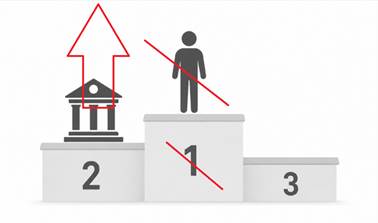
The literal wording of Article 20, Section 2 of the Act on Museums does not prohibit the conduct described. The provision is silent on whether a museum may or may not participate in an auction before exercising its right of pre-emption. This legislative gap could lead to the hasty conclusion that, since the prohibition is not expressly stated, the practice is permitted. This position is also reflected in the commentary on the Act by A. Barbasiewicz (Commentary on Article 20 of MuzeaU, 1st ed., Warsaw 2021). In the opinion of the author of this article, however, such a conclusion is too hasty and could cause numerous legal problems in practice. After all, we know of many situations in which, although the law does not expressly prohibit certain conduct, it is inconsistent with its general principles.
Impact on the auction pricing mechanism
The fundamental problem with this practice lies in its impact on price setting. An auction is a mechanism that is designed to determine the final price. Each bid sends an informational signal to other participants, suggesting that the bidder estimates the item’s value at least at the current bid amount. Private auction participants, observing another bidder’s actions, calibrate their decisions based, among other things, on this observation—the presence of a determined, wealthy competitor encourages higher bids, or, conversely, creates a freeze effect, effectively discouraging other bidders from taking action.
When this competitor is a museum with pre-emptive rights, this perception is false. The museum knows that regardless of the auction outcome, it can acquire the object at the final price, provided it submits a declaration before the auction closes. Its incentive to bid is therefore structurally different from that of a regular bidder: the museum can bid “for show”, driving the price above the level it would otherwise have reached, and then withdraw and profit from this game. Private bidders bear the costs of this asymmetry: they pay for the object a price determined by a participant who, at no stage, played on a common and equal footing.
The phenomenon also has a reverse effect. A museum’s withdrawal from an active auction – especially if it was previously a strong bidder – can confuse other participants and lead to a paradoxical downward effect: other bidders, interpreting the museum’s withdrawal as a signal that the item is overvalued or that the museum has lost interest, refrain from bidding further. The final price is then lower than in a model without museum participation, which works to the seller’s detriment and to the museum’s advantage, benefiting from the preemptive right.
Information asymmetry, the problem of transparency and the so-called chilling effect
Information asymmetry is a persistent feature of the auction market, but its specific form – the lack of knowledge of the presence of a person entitled to pre-emption – is an asymmetry that can and should be remedied. However, current regulations do not require auction organizers to inform participants that an entity with pre-emption rights is among the bidders or observers. This is a regulatory shortcoming with real market consequences.
The scale of these effects is much broader than it might seem at first glance, as they extend beyond the individual transaction and its parties, indirectly influencing the behavior of participants in the entire economic cycle. Collectors and private market participants, aware that museums can actively participate in the auction, influence the price, and then exercise their right of first refusal and “enter” into the negotiated transaction, may begin to limit their participation in auctions. Investing time and resources in expertise, due diligence, or transport becomes economically irrational if the fruit of this effort is likely to be seized by the museum. This chilling effect threatens to cause private buyers to bid less actively or to forgo auctions altogether for objects that may be of interest to cultural institutions. Consequently, this may weaken the entire auction market for cultural goods and negatively impact the level of turnover and competitiveness – to the detriment not only of sellers but also of the market itself as a platform for the effective valuation and circulation of cultural goods.
A private bidder, when deciding to purchase, doesn’t really know whether a contract is realistic. They invest time and resources in due diligence, and sometimes incur transportation and insurance costs. Even if they win the auction, they may be deprived of the object due to a declaration made by the museum before the auction ends. They will recover the amount if they have already paid it. This can be achieved through the institution of unjust enrichment, as the contract under which the price was paid becomes legally null and void upon the exercise of the right of first refusal. Therefore, they lose their legal title to the sum paid. However, they will not recover the auction fee, expert fees, due diligence costs, or any other transaction expenses incurred in the belief that the transaction will be completed. De lege lata, a private buyer has no clear basis for a claim for damages for loss incurred in connection with entering into an unconditional contract – Article 599 of the Civil Code, which governs liability for damages in the event of a breach of the right of pre-emption, is excluded in the case of museum law due to a specific provision in the form of Article 20, Section 4 of the Act on Museums, which provides only for the invalidity of a contract concluded in violation of the right of pre-emption. In practice, adopting such an approach would deprive the buyer of the right to seek compensation for damages resulting from entering into an unconditional contract with the auction organizer. Therefore, it remains an open question whether a buyer who acted in good faith and was not informed of the right of pre-emption should be entitled to compensation, even for transaction costs.
Analogy with the practices questioned by the Office of Competition and Consumer Protection
The information mechanism for this problem is structurally similar to the practice questioned by the President of the Office of Competition and Consumer Protection following investigations into five large Polish auction houses. Four of these entities reserved in their regulations the right for their own employees to participate in auctions, with the employees posing as regular customers and bidding on items up to the reserve price.
The President of the Office of Competition and Consumer Protection (UOKiK) explicitly pointed out that buyers may not have known they were bidding against auction house employees, and that any bid they made could have been interpreted as genuine interest in the work and a genuine offer to purchase it – which could have altered the auction dynamics and artificially shaped the prices of the items being auctioned. These practices were classified as potentially infringing on the collective interests of consumers, and auction houses have adapted their regulations to reflect the Office’s comments (a sample announcement from the President of the UOKiK is available at: https://uokik.gov.pl/prezes-uokik-porzadkuje-zasady-licytacji-w-domach-aukcyjnych ).
This analogy is legally incomplete – a museum generally operates within the bounds of its statutory authority, which does not address the issue of assessing conduct from the perspective of potential evidence of a sham auction. Nevertheless, the information distortion mechanism is identical: the private bidder is unaware of the presence of a uniquely positioned entity on the other side and treats each activity as a reflection of independent market interest. The difference in the subjective motivations of the entity does not change the objective market effect – the distortion of price signals and the disruption of the symmetry of the auction participants.
The Office of Competition and Consumer Protection’s (UOKiK) conduct also sheds another important light on the issue. The competition authority has recognized that the transparency of the auction mechanism is a legally protected value, the violation of which can be assessed in terms of protecting the collective interests of consumers. This raises the question of whether the lack of clear information for auction participants about the museum’s ability to exercise its right of first refusal, let alone its active participation in the bidding, should not be viewed by the regulator as a similar irregularity in the market practices of auction houses.
Assessment in the light of the general principles of civil law
The right of pre-emption, both in doctrine and in the statutory construction, is an instrument of protection, the essence of which is to enable intervention in the sale of specific goods – in the form of “entering” into the agreed price and contractual terms – rather than a tool for actively controlling market processes by influencing the price of the item. The entitled party does not participate in price negotiations between the obligated party and a third party – if it did, the institution would be meaningless. In the auction context, the “price negotiation” is precisely the bidding itself. Active participation by the museum in this phase therefore negates the classic role of the entitled party under pre-emption. This institution serves as a safety net – it is a right, not an obligation, and gives the entitled party the opportunity to acquire specific goods with priority over other interested parties. However, the right of pre-emption does not grant entities the ability to actually influence the terms of sale.
Without directly ruling on the illegality of the practice in question – the applicable provisions do not expressly prohibit it – one should strongly point to arguments based on general principles, which qualify it as at least seriously problematic, and in specific factual circumstances – as an abuse of a subjective right within the meaning of Article 5 of the Civil Code. According to the commentary by Professor P. Machnikowski to Article 5 of the Civil Code (E. Gniewek, P. Machnikowski (eds.), Civil Code. Commentary, 12th ed., Warsaw 2025), both criteria for assessing the behavior of the entitled person – contradiction with the socio-economic purpose of the law and contradiction with the principles of social coexistence – are objective in nature. Whether the behavior falls within the limits of a subjective right is therefore determined not by the mental attitude of the entity, its motives or its intended purpose, but by an objective assessment of the effects of this behavior in the light of the aforementioned criteria. The fact that the museum subjectively acts in the public interest and without the intention of harming other bidders remains irrelevant for the qualification under Article 5 of the Civil Code. The first basis for qualification is a contradiction with the socio-economic purpose of the right. Professor Machnikowski’s commentary indicates that this clause expresses the legislator’s preference for the use of subjective rights that serves the social and economic goals for which a given type of subjective right was established, and its application is all the more justified when the special purpose of the right is specifically assigned by statute – which directly refers to the right of pre-emption in Article 20 of the Act on Museums. The purpose for which the legislator granted the registered museum the right of pre-emption is to protect cultural heritage from the removal of monuments from public collections – not to create an instrument for active interference in the market process of price setting. The right of pre-emption, in its classic construction, assumes neutrality of the rightholder with respect to the price formation process: the rightholder enters the fixed price set by independent market participants. The museum’s active participation in the auction, combined with the subsequent exercise of the right of pre-emption, contradicts this very logic – the museum co-determines the price, which it then pays itself, benefiting from a privileged position unavailable to other participants. This is an example of using one’s right beyond the purposes for which it was granted, and therefore may be considered contrary to the socio-economic purpose of that right. The second ground is a contradiction with the principles of social coexistence. In Professor Machnikowski’s view, the principles of social coexistence encompass moral norms regulating the conduct of some individuals towards others. The overarching imperative behind these norms is the approval of conduct dictated by “just goodwill towards others”. The functioning of modern society is based on the trust that the decisions and actions of participants in the marketplace are based on the assumption of specific, favorable reactions from their partners, and engaging in conduct inconsistent with the legitimate expectations of another person can be considered contrary to the principles of social coexistence. An auction participant has a justified expectation that each of their competitors is bidding solely in their own interest and that the winner of the knockdown will become the owner of the item. By actively bidding, the museum creates precisely this expectation – and then disappoints it by withdrawing, only to later acquire the auction item based on its right of first refusal. Importantly, the doctrine cited above clearly indicates that the principles of social coexistence apply not only to natural persons, but also to legal persons and organizational units to which the law grants legal capacity – therefore, a registered museum cannot invoke its public character as a circumstance excluding the application of Article 5 of the Civil Code.
Regardless of the above, participation in the auction by an entity that knows that it may ultimately purchase the item regardless of the auction result may violate good commercial practice in relations between market participants, within the meaning of Art. 3 of the Act of 16 April 1993 on Combating Unfair Competition (consolidated text: Journal of Laws of 2022, item 1233) – whereby the good practice clause and the social coexistence clause perform, as the doctrine indicates, the same function and have the same meaning, constituting different names for moral assessments and the norms of conduct justified by them.
Practical risks and the proposed model of conduct
Risks for the auction house
The auction organizer operates as a commission agent under the commission model, and therefore bears the obligations arising from the museum’s right of first refusal. The first and most serious risk is allowing a sales agreement to be concluded without securing the exercise of the right of first refusal – such an agreement is absolutely invalid under Article 20, Section 4 of the Museums Act. The auction house is then exposed to claims from both the seller (commissioner) and an uninformed buyer acting in good faith.
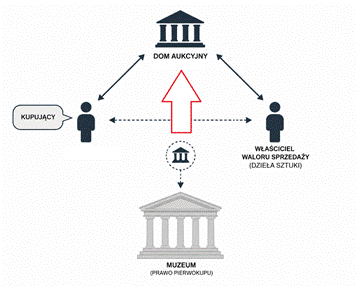
The second risk is reputational and regulatory. Allowing a practice in which a museum actively bids and then exercises its right of first refusal places the auction house in the role of an unwitting participant in a mechanism that distorts auction transparency. The lack of clear rules in the regulations – including, above all, the lack of an obligation to inform auction participants of the presence of an entity holding the right of first refusal – is a loophole that, in light of the conclusions drawn from the Office of Competition and Consumer Protection (UOKiK) proceedings, may become a subject of interest for competition and consumer protection authorities.
The third, practical risk is the need to manage the “domino effect” following the exercise of the pre-emptive right: refund of the purchase price to the buyer, currency conversion of auction fees, and settlement with the consignor. The higher the transaction value, the more serious the operational and financial consequences of improperly executing the procedure.
Risks for a private buyer
The private bidder is the weakest party in the entire mechanism, both informationally and legally. The fundamental risk is obvious: even after winning the auction, they may be deprived of the item due to a declaration made by the museum within minutes of the auction closing. This results in the loss not only of the purchased item but also of transaction costs – the auction fee, consulting fees, expert opinions, transportation, and insurance. Furthermore, the definition of an artifact is relatively broad, and its classification is determined not by the register, but by the item’s characteristics. A buyer who purchases an item unaware of its legal status may be surprised by the exercise of their pre-emptive right by a specialized museum.
The proposed model of conduct
A fair interpretation of the right of first refusal, consistent with its function and general principles of trade, requires the adoption of a dichotomous model. A museum intending to acquire an object at auction should choose one of two methods, but cannot combine them. If participating in the auction as a bidder, it should bid up to the price it is actually willing to pay and purchase the item under general terms – or not purchase if the price exceeds its means. If, on the other hand, it intends to exercise its right of first refusal, it should refrain from actively participating in the auction and merely observe its outcome.
This model is consistent with the essence of pre-emption law, protects the integrity of the auction mechanism, and eliminates the accusation of exploiting a privileged position. However, it requires either voluntary discipline on the part of museums – which cannot be assumed given the budgetary pressures and competition for valuable objects – or explicit statutory regulation, which seems to be a more permanent solution.
This proposal also aligns with a broader analysis of the state of legal regulations in the area of trade in cultural goods. The current regulations constitute a conglomeration of norms scattered across several acts, additionally based on general institutions borrowed from the Civil Code and supplemented by specific provisions. There is a lack of consistent rules of conduct for intermediaries – auction houses and antique shops – in exercising the right of first refusal: there is no obligation to inform auction participants in advance of their right of first refusal, there is no clearly defined procedure for the organizer to verify the status of items, and there is no mechanism to guarantee the protection of the buyer’s good faith. These gaps should be filled by the legislature before market practice necessitates further intervention by the competition authority.
The right of first refusal of a registered museum is a legitimate instrument from the perspective of cultural heritage protection. The problem lies not in its existence, but in the manner in which it is exercised. An auction is a pricing mechanism, not simply an organizational form of sale. Its integrity requires protection regardless of the participant.
A museum’s combination of an active bidder role with the subsequent exercise of a right of first refusal is a practice that – though not explicitly prohibited – violates the very essence of the institution of first refusal, distorts the price discovery mechanism, and disadvantages private market participants. In the case where the museum’s participation drives the price above market level, the private buyer loses the object at a price determined by the entity that ultimately acquires it. In the opposite case, the seller receives a lower price for the object because the museum’s presence has confused bidders. In neither scenario does the auction mechanism function as intended.
The analogy with the practices questioned by the President of the Office of Competition and Consumer Protection shows that auction transparency is a value protected by the legal system.
Legal basis and literature:
Legal acts:
- Act of 23 July 2003 on the protection and care of monuments (consolidated text: Journal of Laws of 2024, item 1292, as amended);
- Act of 21 November 1996 on museums (consolidated text: Journal of Laws of 2022, item 385);
- Act of 21 August 1997 on real estate management (consolidated text: Journal of Laws of 2026, item 399);
- Act of 14 July 1983 on national archival resources and archives (consolidated text: Journal of Laws of 2020, item 164);
- Act of 23 April 1964 – Civil Code;
- Act of 16 April 1993 on Combating Unfair Competition (consolidated text: Journal of Laws of 2022, item 1233)
Literature:
- Barbasiewicz A., Commentary to Article 20 of the Museum Act [in:] The Act on Museums. Commentary, 1st ed., Warsaw 2021.
- Civil Code, Osajda series editor/Borysiak volume editor 2025, 34th edition, commentary to articles 596–602 of the Civil Code Machnikowski P., Commentary to article 5 of the Civil Code [in:] E. Gniewek, P. Machnikowski (eds.), Civil Code. Commentary, 12th edition, Warsaw 2025.
- Szafrański W., Current problems and threats related to the trade in cultural goods on the art market in Poland from the perspective of legal protection of monuments, “Santander Art and Culture Law Review” 2019, no. 1 (5), pp. 41–68.
Other sources : Announcement of the President of the Office of Competition and Consumer Protection regarding explanatory proceedings against auction houses: https://uokik.gov.pl/prezes-uokik-porzadkuje-zasady-licytacji-w-domach-aukcyjnych.
