Changes in the procedure in the Polish civil and administrative court proceedings under the Acts of May 14, 2020 and May 28, 2021 on the amendment of certain acts in the field of protective measures in connection with the spread of SARS-CoV-2 virus.
The epidemic caused by the Covid-19 virus has
significantly introduced changes in the search for safe solutions for
people-to-people contact. These changes also affected the courts and the mode
of court hearings, in order to ensure the greatest possible safety for the
parties to the proceedings and court employees. In this situation, the best way
to limit direct contact was the possibility of using electronic communication
methods.
Legal basis
Amendment to the Polish Act of March 2, 2020
on special solutions related to the prevention, counteraction and combating of
COVID-19, other infectious diseases and the emergencies caused by them,
implemented by two acts of May 14, 2020 and May 28, 2021, allowed for the
possibility of holding court hearings in Polish courts with using means of
distance communication. The change resulting directly from article 15 zzs1
of the Polish Act of 2 March 2020 allowed for the possibility of participating
in a remote hearing from a place other than the court, because until now the Polish
Code of Civil Procedure allowed for the possibility of conducting a remote
hearing, but the persons participating in it had to be present in the court
building. Pursuant to article 15zzs1 point 1 of the Polish Act of 2
March 2020, during the period of the epidemic threat or epidemic state
announced due to COVID-19 and within one year of the last of them being
recalled in cases examined under the provisions of the Polish Code of Civil
Procedure, court hearings or open sessions are held with the use of technical
devices enabling them to be carried out at a distance with the simultaneous
direct transmission of image and sound, except that the people participating in them
do not have to be in the court building, unless holding a hearing or a public
hearing without the use of the above devices causes excessive health risk to
the participants.[1]
The Wall Street Journal recently described quirks in the U.S. Tax Treaty with Malta that became a popular topic in the legal advice sector.[1] In the said article, WSJ describes an offshore tax shelter (a tax regulation in Malta) which promises rich Americans they can avoid lots of capital-gains taxes by setting up pensions in Malta. This issue is not only American struggle with tax abuse. For instance, Poland has also signed an international tax treaty with Malta (Agreement between the Government of the Republic of Poland and the Government of Malta for the avoidance of double taxation and the prevention of fiscal evasion with respect to taxes on income signed in La Valetta on 7 January 1994)[2] and in 2020 the Treaty was amended due to the necessity of closing loopholes in the international (bilateral) tax system[3]. Moreover as a restoration of the Polish industry after COVID-19 pandemic, the Polish Government and the Ministry of Finance prepared the new Tax Act which shall prevent the change of the entity’s tax residence to the offshore tax shelter [4].
Before
we move to the tax abuse based on the U.S. bilateral tax treaty with Malta it
is advisable to start with Treaty’s provisions treatment.
U.S.
– MALTA TAX TREATY
The Treaty was done in 8 August 2008 and came into force in late 2010. As Jeffrey L. Rubinger wrote The Treaty contains very favorable provisions that can result in significant tax benefits to U.S. members of a Maltese pension. In order for such U.S. members to take advantage of these benefits, the pension must qualify as a resident of Malta under the Treaty and also satisfy the limitation on benefits (LOB) article of the Treaty. [5]In his article Rubinger enumerates the Treaty’s provisions that could become a victim of the interpretation tax abuse.
Brand New Online Portal of the Polish Register of Entrepreneurs of the National Court Register
On 1st July 2021 in Polish jurisdiction a revolutionary change has taken place. Namely, there has been amended an Act on the National Court Register (Journal of laws of 2021, item 112 as amended).[1] The amendment is about an introduction of an electronic registration procedure. Especially the form of filing applications for the entry in the Register of Entrepreneurs of the National Court Register will be changed.[2] The amendment mainly concerns the registration issue of the limited liability company and the partnerships.
The National Court Register Act amendment is caused by a necessity to implement the European Parliament directives and the EU’s Council directives on some of the company law aspects (2017/1132 EU; 2012/17/ EU, etc.).[3] The issue of the adaptation to the European Union law can be found in the first article (art.1) of the Amendment Act of the National Court Registration Act.
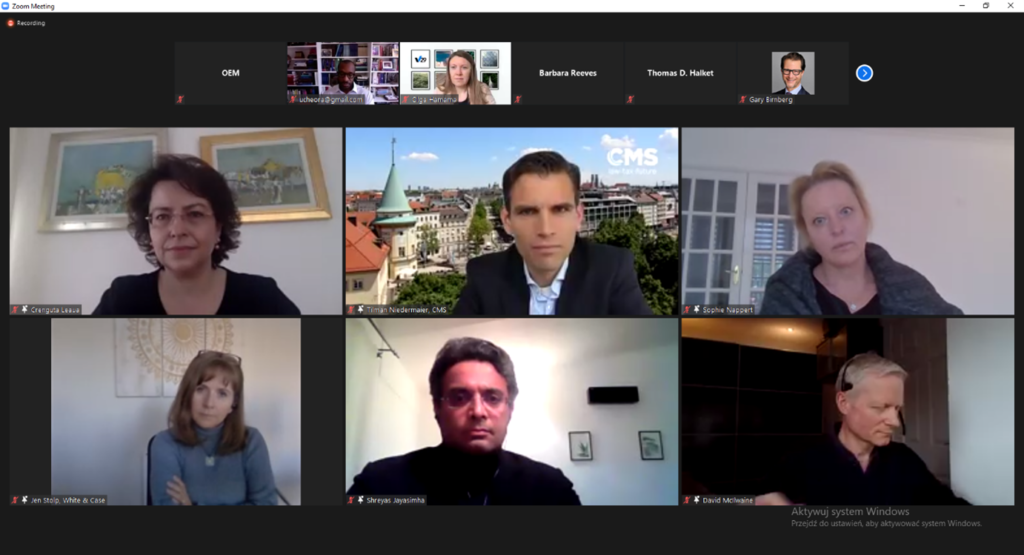
A roundtable discussion among experts was held on 14 May 2021, which addressed the potential and challenges of dispute resolution for blockchain-based transactions.
This was the fourth event in the inaugural series organized by the SVAMC Initiative on Arbitration, Mediation and Blockchain-based Transactions.
Translation into French language made by Julian Morgan, trainee at Kiełtyka Gładkowski KG Legal
Affaires transfrontalières
CROSS BORDER CASES
Qui sont nos clients ? En tant que cabinet d’avocats polonais, Kiełtyka Gładkowski KG Legal fournit une expertise particulière pour les sociétés et clients privés. Nous assistons des entités internationales dans leurs relations juridiques avec les entreprises, le gouvernement et les autorités administratives polonaises. Nous conseillons également en cas de litige. Nous sommes souvent mandatés par des cabinets d’avocats internationaux dans la représentation des intérêts de leurs clients en Pologne autant en matière contentieuse qu’en matière non contentieuse.
Who are our Clients? KG Legal, as a Polish law firm, provides specialist expertise for corporate and private clients. We assist international entities in regulating their relations with Polish companies, government and administrative authorities and we assist in cross border litigations. We are often instructed by international law firms in respect of representing their clients in Poland, both in contentious and non-contentious matters.
KIEŁTYKA GŁADKOWSKI KG Legal | POLISH LAW FIRM rated in LEGAL 500 EMEA 2019