On 10 August 2026, MyDr, one of Poland’s largest providers of electronic medical records software, confirmed that it had been the target of a deliberate criminal attack on its systems. Two days later, the Ministry of Digital Affairs announced that the incident may affect close to 19 million individuals and more than 12,000 healthcare facilities, and that the exfiltrated database exceeds 2 terabytes.
The attackers supplied the security portal Zaufana Trzecia Strona with a data sample suggesting that they hold PESEL numbers (Polish national identification numbers) and at least fragments of prescription information.
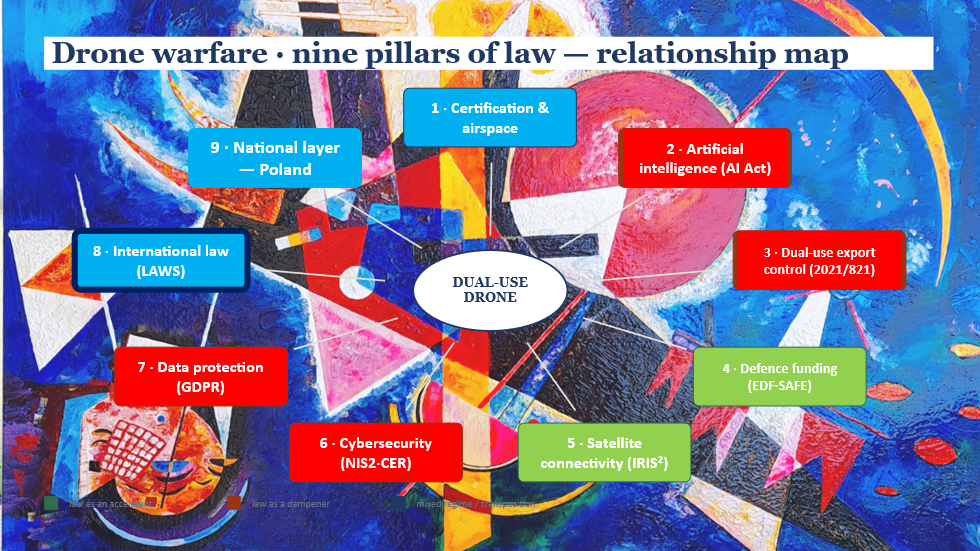
The Legal Environment and Practical Aspects of Dual-Use Technology – the Ukrainian Conflict as a Lens on the Development of EU Regulation and the Polish Jurisdiction – Expanded Edition – Legal status as at 25 August 2026
Authors: attorney-at-law (radca prawny) K. Jakub Gładkowski (corporate practice, court and regulatory representation), attorney-at-law (radca prawny) Małgorzata Kiełtyka (M&A, high-technology and highly regulated sectors) – KG Legal Kiełtyka Gładkowski Spółka Partnerska Kancelaria Radców Prawnych; iSTART1 programme.
This material is of a popular-science and informational nature. It does not constitute legal advice or a binding opinion. Before citing any specific provision, the current consolidated version in EUR-Lex and the current entry in the Polish Journal of Laws (Dziennik Ustaw) should be verified in each case.
Siri, Cortana, Google and other applications use human voice to do a variety of things, e.g. searching for information, sending emails, calling somebody. Voice-based technologies are increasingly applied in legal environment and legal services, for example in legal advice rendered online and in legal translations. At the same time, new applications of innovative technologies caused the necessity to define the approach to privacy issues anew. The cases of Edward Snowden and Julian Assange showed us how meaningful privacy and its protection is and made us realize the excessive amount of personal data processed and stored daily. This is why privacy and its protection will soon become one of the most important personal rights. The issue of voice protection comes to the fore in this context. Voice is, obviously, a personal right. What is more, voice is becoming a tool used by most applications both for mundane activities as well as more complex ones, like ROSS AI operating on IBM’s Watson, which can do legal research and is learning to understand law with every research conducted by it. What if it was possible for such applications as Watson to use the voice of a specific lawyer and, with the use of voice sample, produce speech of a different content, for example in the form of legal advice? Well, practically it is possible, since last November Adobe presented Adobe VoCo to the world, which (when having a voice sample) is able to read various content differing from the conent sampled. The present article will try to shed some light to the issue of the risk involved with voice cloning technology in legal environment and will analyse whether law can adequately protect human voice as a personal right.