Technical debt, GDPR and NIS2 – how yesterday’s shortcuts turn into tomorrow’s liability
Why technical debt arises
Technical debt is a phenomenon that sooner or later affects almost every IT project. It consists in choosing a solution that is quicker to deliver but inferior in technical quality. A team usually “takes out” this loan under pressure from the business side, for which the key metric is time-to-market – the sooner the product reaches the market, the better.
In the short term this brings a quick win, but in the future the company has to start paying the “interest”. It shows up as ever higher system maintenance costs, a slowdown in the pace of work, and the mounting frustration of developers who, instead of developing the product, must keep fixing the same defects over and over. Although the term “technical debt” appears nowhere in legislation, concepts such as due diligence and the adequacy of technical measures in practice force companies to keep that debt from spiralling out of control.
The loss or corruption of data in a business is rarely “just” a technical problem. In practice it is a serious legal and financial crisis: production downtime, loss of trust among business partners and, in extreme cases, administrative fines running into millions. The scope of liability, however, depends above all on what kind of data has been lost or corrupted. The law treats the loss of source code or technical documentation quite differently from a leak of employee records or a customer database. The first step in assessing liability for a breach of the integrity or availability of data is therefore its unambiguous legal classification.
On 10 August 2026, MyDr, one of Poland’s largest providers of electronic medical records software, confirmed that it had been the target of a deliberate criminal attack on its systems. Two days later, the Ministry of Digital Affairs announced that the incident may affect close to 19 million individuals and more than 12,000 healthcare facilities, and that the exfiltrated database exceeds 2 terabytes.
The attackers supplied the security portal Zaufana Trzecia Strona with a data sample suggesting that they hold PESEL numbers (Polish national identification numbers) and at least fragments of prescription information.
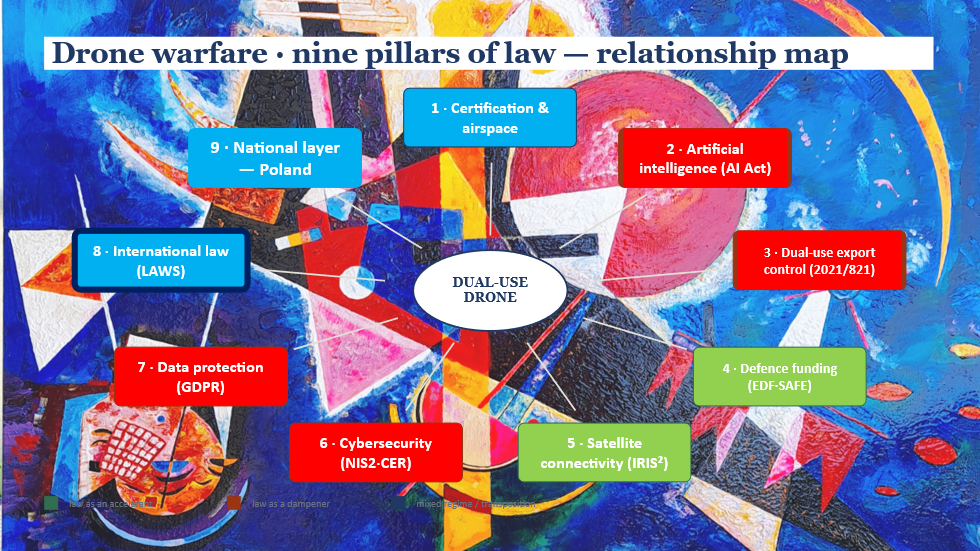
The Legal Environment and Practical Aspects of Dual-Use Technology – the Ukrainian Conflict as a Lens on the Development of EU Regulation and the Polish Jurisdiction – Expanded Edition – Legal status as at 25 August 2026
Authors: attorney-at-law (radca prawny) K. Jakub Gładkowski (corporate practice, court and regulatory representation), attorney-at-law (radca prawny) Małgorzata Kiełtyka (M&A, high-technology and highly regulated sectors) – KG Legal Kiełtyka Gładkowski Spółka Partnerska Kancelaria Radców Prawnych; iSTART1 programme.
This material is of a popular-science and informational nature. It does not constitute legal advice or a binding opinion. Before citing any specific provision, the current consolidated version in EUR-Lex and the current entry in the Polish Journal of Laws (Dziennik Ustaw) should be verified in each case.
We are delighted to share an important milestone in the continued development of KG Legal’s Data, AI & Cybersecurity Desk.
It has been a great honour to serve as the exclusive expert contributors for Poland to the OneTrust DataGuidance Privacy Overview – Poland, one of the world’s leading professional legal compliance resources relied upon by in-house counsel, privacy professionals, compliance officers, multinational organisations and technology companies operating across multiple jurisdictions.