The Wall Street Journal recently described quirks in the U.S. Tax Treaty with Malta that became a popular topic in the legal advice sector.[1] In the said article, WSJ describes an offshore tax shelter (a tax regulation in Malta) which promises rich Americans they can avoid lots of capital-gains taxes by setting up pensions in Malta. This issue is not only American struggle with tax abuse. For instance, Poland has also signed an international tax treaty with Malta (Agreement between the Government of the Republic of Poland and the Government of Malta for the avoidance of double taxation and the prevention of fiscal evasion with respect to taxes on income signed in La Valetta on 7 January 1994)[2] and in 2020 the Treaty was amended due to the necessity of closing loopholes in the international (bilateral) tax system[3]. Moreover as a restoration of the Polish industry after COVID-19 pandemic, the Polish Government and the Ministry of Finance prepared the new Tax Act which shall prevent the change of the entity’s tax residence to the offshore tax shelter [4].
Before
we move to the tax abuse based on the U.S. bilateral tax treaty with Malta it
is advisable to start with Treaty’s provisions treatment.
U.S.
– MALTA TAX TREATY
The Treaty was done in 8 August 2008 and came into force in late 2010. As Jeffrey L. Rubinger wrote The Treaty contains very favorable provisions that can result in significant tax benefits to U.S. members of a Maltese pension. In order for such U.S. members to take advantage of these benefits, the pension must qualify as a resident of Malta under the Treaty and also satisfy the limitation on benefits (LOB) article of the Treaty. [5]In his article Rubinger enumerates the Treaty’s provisions that could become a victim of the interpretation tax abuse.
SECOND
PART- TRENDS AND DEVELOPMENT OF SPECIFIC TELEHEALTH SECTORS
SECOND PART- TRENDS AND DEVELOPMENT OF SPECIFIC TELEHEALTH SECTORS
Sectoral legal advice for clients from the telemedicine sector requires from lawyers to constantly monitor the market in this sector and constantly expand their knowledge of market needs. It is the duty of every lawyer of KIEŁTYKA GŁADKOWSKI to be up-to-date with the sector of economic activity on which they provide legal services. Proper legal advice requires from lawyers to know the market practice of a given sector, and above all, knowledge of complex IT terminology and the basics of the pharmaceutical market.
I
Telehealth trends’ perspectives
On
the Telehealth Investment Trends we can have a look from different
perspectives.
One
of these perspectives is a funding perspective. In the 2nd quarter
of 2021 we can notice a funding record broken for the 4th quarter in
a row (from the 3rd quarter of 2020). The deal count amounted 163
deals and the funding amounted 5,038 (in millions of dollars).
The
continental differences. It is explicitly noticeable that European investment
nearly quintupled QoQ to reach a record high of $915M. Asian investments almost
halved, north American investment slightly increased but European made an incredible
investment growth which might be a long-perspective tendency (especially
regarding the COVID-19 pandemic and Europe’s ageing an increasingly digitalized
society). Among these reasons and investment tendencies the polish executive
in the abovementioned ordinance included the procedures to impart instructions
about e- medical prescription realization, additional treatment, tests
realization (including laboratory tests) and possibility to sign up an Online
Patient Account[1].
These procedures and medical services requirements can be (and in deed will be
for sure) unquestionably helpful for older people who are yet to learn with
increasingly used IT systems.
The
differences between early-, mid- and late- stage deal percentage. It is worthy
to notice that in the 2021 early-stage deal share tracked at a historical low
but at the same time the late-stage share at its high level (12% in comparison
to previous 8%). This may reflect the increasing sophistication and maturity of
the telehealth industry and of course the maturity and investment development
and advancement of telehealth entities.
On the 3th July 2021 the amendments of the Rules of Polish Civil Procedure and other statutory laws (especially the statutory law about solutions related to preventing, counteracting and combating COVID- 19) have entered into force.
The Act of the Council of Ministers’ initiative provides for a number of changes in the Polish civil procedure, including:
more
online hearings,
participation
of witnesses in remote hearings,
examination
of the case by a single-judge panel,
new
procedure for the service of judicial documents,
PLAN, CAPTURE AND SET THE INFRASTRUCTURE FOR DATA SHARING ACROSS THE VALUE CHAIN, TO OPTIMIZE COMMERCIAL STRATEGY.
On July 29, 2021 KG Legal Kiełtyka Gładkowski will take part in webinar ‘Cell and gene data innovation and multi-stakeholder data transfer’ organized by Reuters as part of the activities of Pharma Boardroom (the global platform for C -level healthcare executives) in partnership with Sales force. This online-conference will focus on the life-changing cell and gene therapies and related with it value chains of these therapies and data transfer between the stakeholders.
The forms of doing business in Poland by the EU entity – Temporary provision of services in Poland on the basis of economic activity in one’s own country.
It is possible to temporarily operate business in Poland without setting up a separate entity. This form of providing services in Poland can only be temporary and in some cases an additional notification to competent authorities is required.
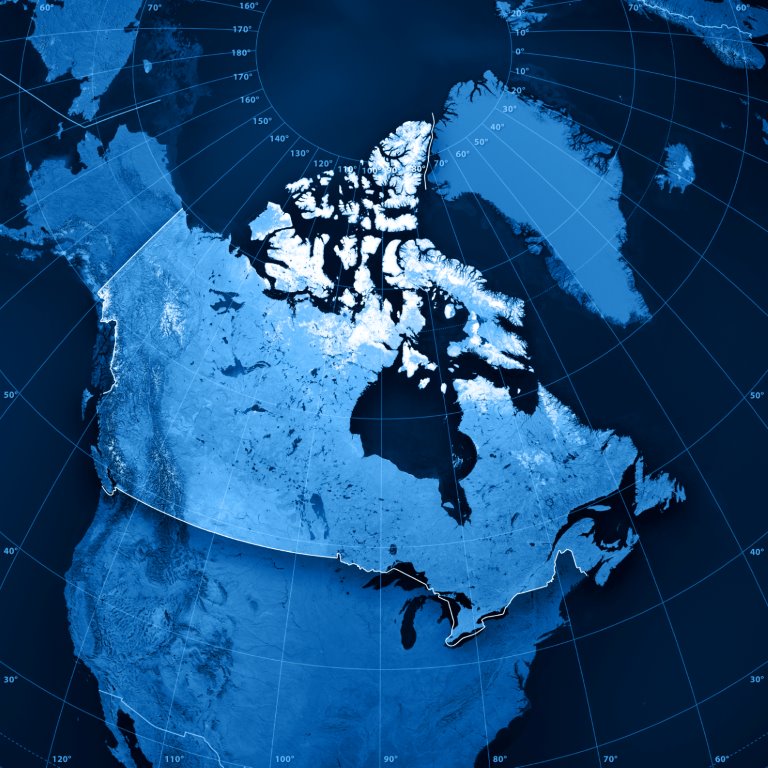




 The forms of doing business in Poland by the EU entity – Temporary provision of services in Poland on the basis of economic activity in one’s own country.
